
Mother’s Sutra
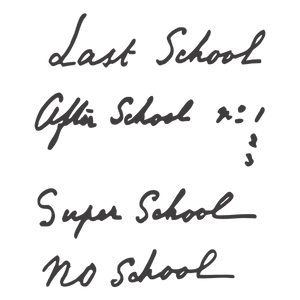
The Mother’s list of names given for Auroville schools
LAST SCHOOL TO NO SCHOOL
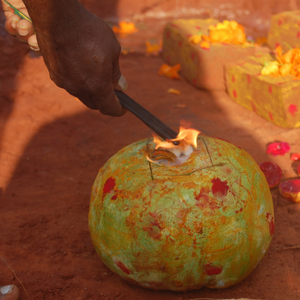
Last School
The first School in Mother’s list is called “Last School”—clearly this suggests that it is the last school. But as it begins the list, it must correspond to the point where schooling actually commences which is necessarily post Kindergarten.
Beginning with “Last School” and ending with “No School”, this programme links with the second point of the Auroville Charter, which sees Auroville as a place of “unending education, constant progress and a youth that never ages”. The method to be followed is based upon what Mother called ‘Free Progress’. Thus the first years, when the child is learning, is being trained to read and write languages and make calculations, are the years of last school.
The teacher is there to train, to develop further and to awaken innate faculties so that as quickly as possible the child may learn how to learn independently. This beginner’s stage can also correspond to any first introduction or encounter with a new field of learning.
“Free Progress necessarily implies a great plasticity.”
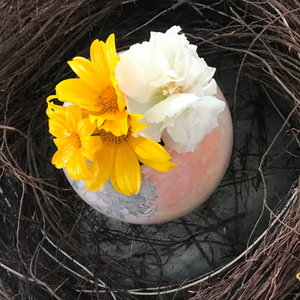
After School
Subsequently, we enter into the years of After School, which has three phases according to Mother’s list. These can be understood literally to refer initially to the period when the youth consolidates and develops the knowledge and skills gained in the Last School phase.
All methods are valid—one has to find the right method for a given person or situation, which may be valid only for that particular person/situation.
It is when this has been achieved that he automatically tries to experiment and apply the knowledge learned, through a process of repeated experimentation and demonstration.
Finally, ready to move further, the youth enters a period of further exploration in which he widens his horizons and discovers newer vistas and worlds to learn and know about.
In these three phases, which can be defined broadly as stages of:
Development; Demonstration; Exploration, the teacher’s role, informed by keen observation and deep understanding, is more and more that of friend, guide and helper.
And he/she uses the triple method of suggestion; influence and example—never of imposition —to work with the developing personality of the youth. (It must also be understood that each of these stages exist simultaneously, based as they are on the varying level of advancement that a youth may have in any given domain. And one can conceive of a person being at the Last School stage (that is, the level of Basic training) in one subject, area of self development or skills training and in another, After School 3 (the stage of further Exploration).
It is only that each stage emphasises one approach over and above the others.

Super School
Super school is a school where the subjects are of the higher levels of human thought and action and are treated in a holistic manner. The programme is pursued at a “super” level and at a “superior accelerated speed. The aim is to “summarise” the human past so quickly that one can have all the energies to to pursue the development of the future. This requires a great deal of “schooling”, which can be seen as a process where a lot of care and attention is given to students. Super School prepares the being to enter into “No School” which is the condition when the instrumental nature is fit to pursue on its own, integral growth, ie.: Wisdom; Heroism; Harmony; Skill in Works.
The programme will have a component that addresses all the four domains of the Integral personality. Thus students are encouraged not only to pursue the programme developed below which addresses mainly the first aspect but also to consciously address each of the other elements (through the means of apprenticeships, skills training, physical culture, community service etc). A student of Super School ought to have a full programme.
The aim is integral personality development, and someone is needed who can help to indicate the essence of each domain. Schooling is intensive but of another order. This is also the phase of apprenticeships and the acquisitions of skills and/or professional training.
“Auroville is the place where this new way of life is being worked out. It is a centre of accelerated evolution where man must begin to chnge his world through the power of the inner spirit.”
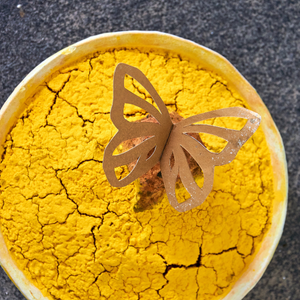
No School
It is Super School that prepares the being to enter into the stage of No School which can be conceived of as the moment when the awakened consciousness needs no other guide than the one within.
Mother saw Auroville as a learning society and each unit necessarily should be a learning environment. In the future we can envision that possibilities for apprenticeships and professional/skills training will be available in all units. Everyone will be a teacher and learner simultaneously and Auroville…
“Auroville will indeed be the place of an unending education, constant progress and a youth that never ages.”
But till then the ‘schools’ and the society have a work to do in growing into the dimensions indicated in Mother’s Sutra for Auroville education. Such are the ideas arrived at as of now but obviously more will be discovered and developed as the underlying truth of Auroville grows and manifests.
Much of what has developed so far can be viewed through the perspective created by Mother’s list of names. A certain conscious analysis and rationalisation still needs to be undertaken, but already each of these stages exists in practice.
“The aim of education is not to prepare a man to succeed in life and society,
but to increase perfectibility to its utmost.”
~ The Mother
Why is it called Last School? (2024)
InLight, Auroville
Free Progress learning:
A journey of Self-Discovery and Integral Growth
Last School is named to reflect Auroville’s vision of lifelong learning, where education is not separate from life. Guided by The Mother’s vision, it follows a Free Progress approach that allows students to develop along their own paths. Learning focuses on inner, psychological, and character growth rather than fixed academics. Teachers act as facilitators, supporting freedom, responsibility, and self-discovery.
Why is it called Last School?
“It was indeed the first school of Auroville and the mother who is at the origin of the Auroville project when she was asked to give a name for the first school of Auroville she gave this name Last School. The whole of Auroville is supposed to be a place of unending education and constant progress therefore there will be no separation between school and work and school as we know them will not exist.”
~Teacher
Why is it called Last School? (2024)
InLight, Auroville
Free Progress learning:
A journey of Self-Discovery and Integral Growth
Last School is named to reflect Auroville’s vision of lifelong learning, where education is not separate from life. Guided by The Mother’s vision, it follows a Free Progress approach that allows students to develop along their own paths. Learning focuses on inner, psychological, and character growth rather than fixed academics. Teachers act as facilitators, supporting freedom, responsibility, and self-discovery.
Why is it called Last School?
“It was indeed the first school of Auroville and the mother who is at the origin of the Auroville project when she was asked to give a name for the first school of Auroville she gave this name Last School. The whole of Auroville is supposed to be a place of unending education and constant progress therefore there will be no separation between school and work and school as we know them will not exist.”
~Teacher
Sri Aurobindo International Institute of Educational Research
Over the last 17 years, through Sri Aurobindo International Institute of Educational Research (SAIIER), Auroville has strived to realise this vision. Auroville’s commitment and its past history now position it to make evermore significant contributions to the world at large toward the manifestation of human unity.
As this theme is vast and is also being pursued in several other international universities, it is felt that in Auroville this theme should be focussed on special subjects found in the works of Sri Aurobindo and the Mother.
SAIIER promotes and coordinates most of the educational and cultural programmes in Auroville, the international township in South India dedicated to the evolution of consciousness. Since its founding in 1984, the Sri Aurobindo International Institute of Educational Research (SAIIER) has served as a living support system for Auroville’s wide-ranging educational work. It holds the function of nurturing, protecting, and resourcing educational initiatives aligned with the spiritual vision of Auroville and the Integral Education of Sri Aurobindo and the Mother. SAIIER anchors dozens of schools, research programmes, community initiatives, and collaborative experiments across Auroville and its bioregion. The strength of the Institute lies in its quiet continuity: in the people who have built it through trust, through steady work, and through a shared aspiration to place the soul at the center of education.
One of the principal means for attempting the growth of consciousness towards a future of unity, mutuality and harmony, was an enabling education. Thus in the 50’s, was launched in the Sri Aurobindo Ashram, the plan of an international university centre.
The Sri Aurobindo International Centre of Education (SAICE) came into being on the 6th of January 1952 located near the Sri Aurobindo Ashram, Puducherry. This centre, which has never adhered to the mechanical examination processes of the certificate system that are so cruel sometimes to the psychology of growing youth, has shone forth as an inspiration for the possibilities of a truly child-centred education much more conducive to the psychological disposition of the growing child. It has seeded the country with hundreds of its ‘graduates’; youngsters educated in the free progress system, that The Mother described as an education guided by the soul and not subject to habits, conventions and pre-conceived ideas. The freedom to progress in one’s own way is the most favourable condition for self-finding – it is the technique that universal Nature adopts for her thinking instrument: man – so why should it be denied to the growing psychological nature of the child.
“I must have the courage to stand outside the utilitarian logic of the world. Free progress refuses the pressure of certification, comparison, and competition. To hold that space requires a certain tapasya (determination) — an inner clarity and steadiness that does not waver when the world pushes back.”
~ Teacher
“I must have the courage to stand outside the utilitarian logic of the world. Free progress refuses the pressure of certification, comparison, and competition. To hold that space requires a certain tapasya (determination) — an inner clarity and steadiness that does not waver when the world pushes back.”
~ Teacher
About Last School
About Last School